Reserved launch windows
- Alcântara
- Andøya
- Cape Canaveral
- Haiyang
- Jiuquan
- Kodiak
- Kourou
- Mahia
- Sriharikota
- Starbase
- Taiyuan
- Tanegashima
- Vandenberg
- Wallops Island
- Wenchang
- Xichang
The range already reserved the backup nights.
A launch slips. Most apps show you the new date afterwards, and only that one. Scrubline shows you every night the range already set aside for it, before it slips.


- Free
- The board, how many backup nights exist, your alerts, and the record.
- Scrubline Pro
- Each of those nights with its time.
No account, no email address.
What you get
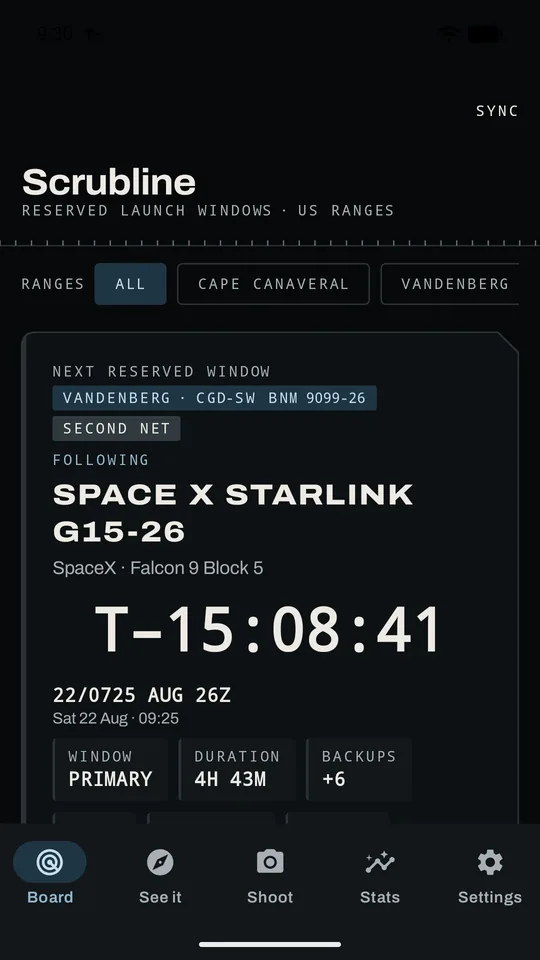
Board
The next reserved window, counting down.
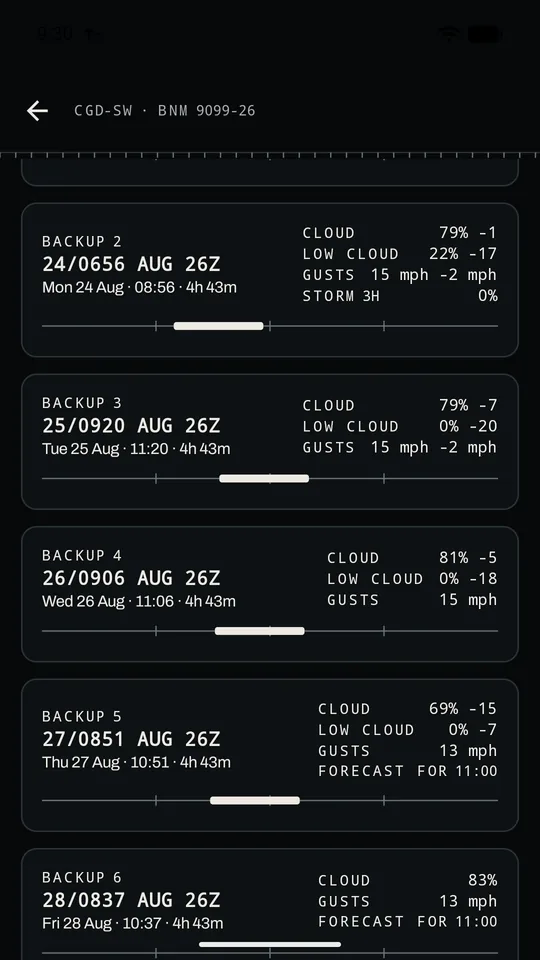
The ladder
Every backup night the range reserved behind it.
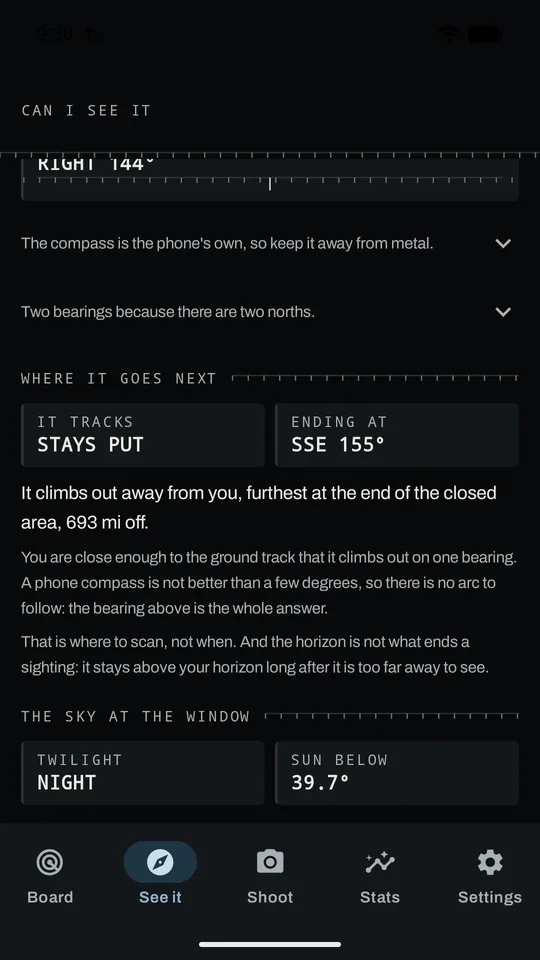
See it
Which way to face, and how high it has to climb.
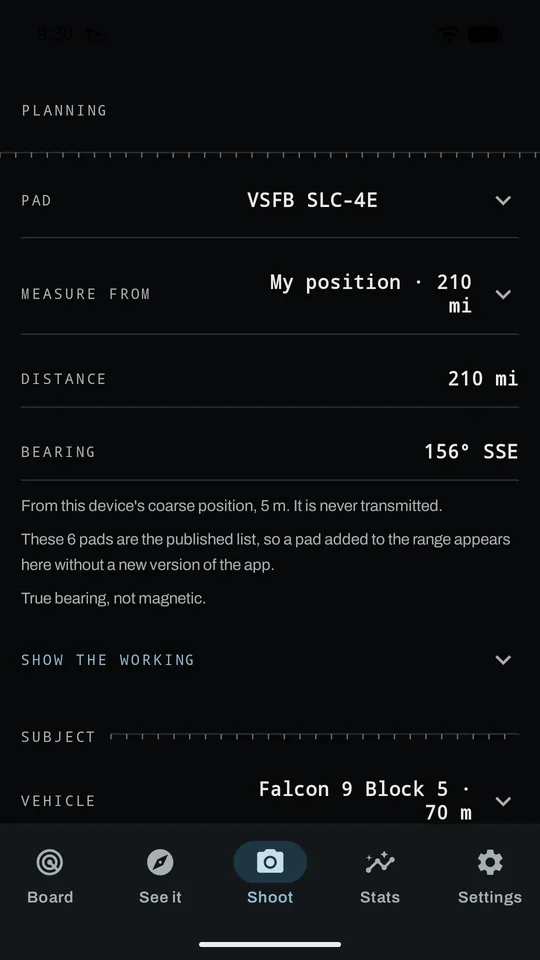
Shoot
Which lens actually frames it from where you'll stand.
Why the backups matter
Almost every other tracker shows one time: the next attempt. When it slips you find out afterwards, and all you find out is that a new date exists, not which one.
The range knows in advance. Reserving sea space for a launch means reserving the backup nights at the same time, and those reservations are published days to weeks ahead. The catch is upstream: the schedules most apps are built on have room for one window per launch and nowhere to put a second, so no app reading them can show you the rest however good it is.
Scrubline reads the reservations themselves. You get every night the range set aside, and the list is rewritten when the range changes it.
What this deliberately doesn't do
There's no go/no-go probability here yet, on purpose. We're scoring our predictions privately first. A probability with no published record behind it is worse than none, because it invites someone to cancel a booking on a number nobody has checked. When there's a record worth showing, it's published with the sample size attached, in the app.
- These ranges only: Alcântara, Andøya, Cape Canaveral, Haiyang, Jiuquan, Kodiak, Kourou, Mahia, Sriharikota, Starbase, Taiyuan, Tanegashima, Vandenberg, Wallops Island, Wenchang, Xichang. Each one has an authority publishing the hazard areas a launch closes, at sea or in the air, in a format we can read; plenty of ranges elsewhere publish theirs in formats we haven't built for yet. Saying so beats faking coverage.
- A reserved window is not an attempted one. A window passing unused usually means the launch wasn't tried that night, not that an attempt was scrubbed.
- The weather is a forecast, never a verdict. It's the public forecast for the range at that hour, or, where none was published for that hour, the nearest one that was; each window says which on its face.